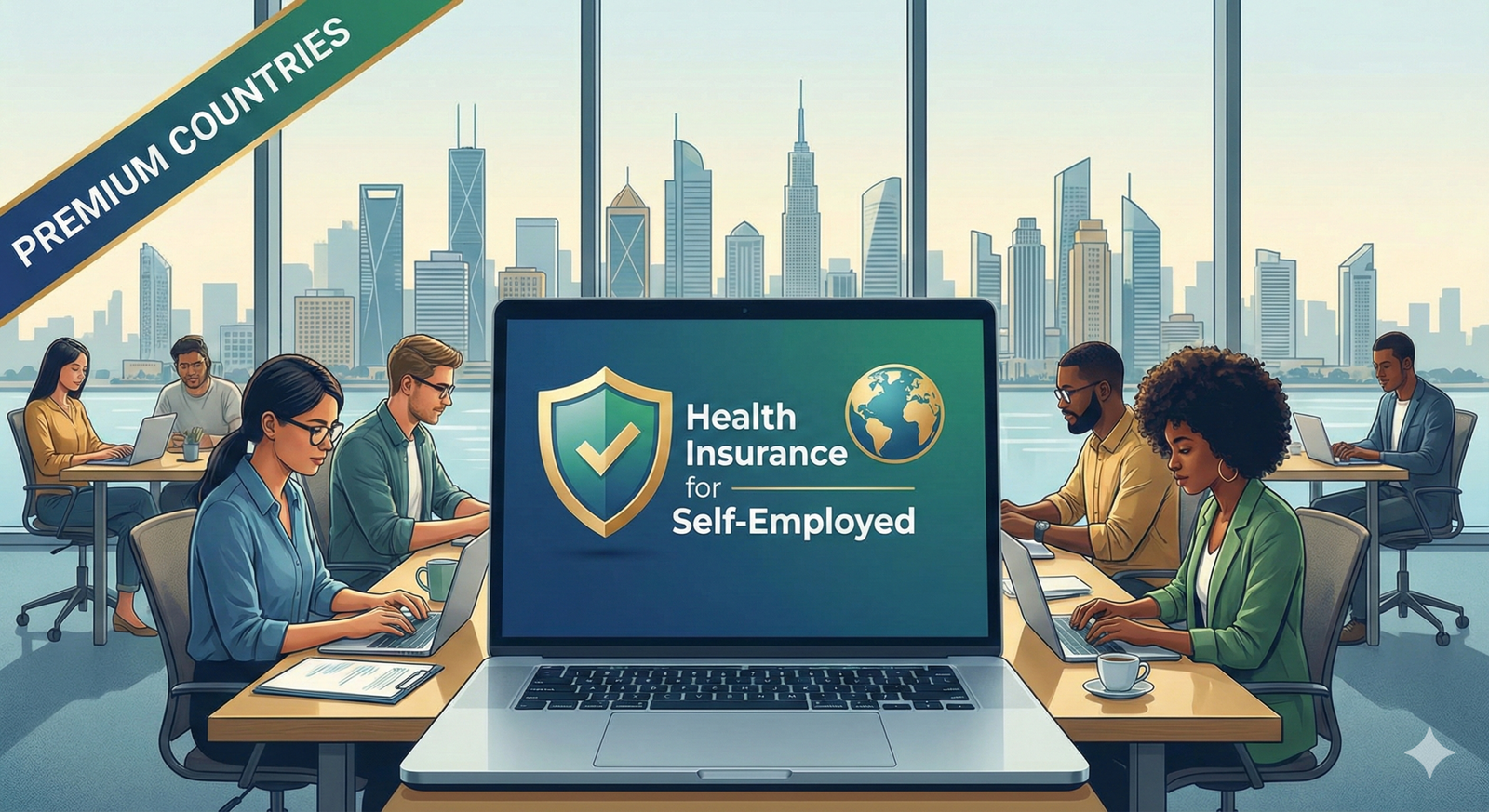
Self-employed professionals face a unique financial risk: no employer-sponsored health insurance. In countries such as the United States, United Kingdom, Canada, Australia, and France, private health insurance becomes a critical financial safeguard for freelancers, consultants, and independent business owners.
This article focuses on health insurance solutions for self-employed individuals actively searching for coverage options.
Why Health Insurance Is Essential for the Self-Employed
Unlike salaried employees, self-employed professionals must manage healthcare costs independently. Medical expenses without insurance can disrupt cash flow, savings, and long-term financial planning.
Private health insurance provides:
- Predictable healthcare costs
- Access to private hospitals and specialists
- Protection against major medical expenses
- Coverage continuity regardless of employment status
Health Insurance for Self-Employed Individuals in the United States
In the US, self-employed professionals rely heavily on private health insurance.
Common options include:
- Individual marketplace health insurance plans
- Private PPO and HMO policies
- High-deductible health plans with savings accounts
Coverage selection depends on income stability, medical needs, and tax planning strategies.
Private Health Insurance for Freelancers in the United Kingdom
Freelancers in the UK often use private health insurance to supplement public healthcare.
Private coverage offers:
- Faster access to diagnostics and specialists
- Private hospital treatment
- Reduced waiting times
Self-employed professionals value flexibility and speed of care.
Health Insurance Options for the Self-Employed in Canada
Canada’s public healthcare does not cover all medical expenses.
Private health insurance for self-employed individuals typically includes:
- Prescription drug coverage
- Dental and vision care
- Mental health services
- Extended medical benefits
These plans help stabilize healthcare costs for independent workers.
Health Insurance for Freelancers in Australia
Australian self-employed professionals often choose private health insurance for greater flexibility.
Benefits include:
- Access to private hospitals
- Shorter wait times for treatment
- Coverage for additional health services
Private insurance is frequently integrated into long-term financial planning.
Health Insurance for Independent Professionals in France
In France, self-employed individuals combine public healthcare with private complementary insurance.
Private plans help cover:
- Co-payments and excess fees
- Specialist consultations
- Enhanced hospital services
This combination ensures comprehensive and affordable healthcare access.
Key Features Self-Employed Buyers Look For
When selecting health insurance, freelancers prioritize:
- Affordable premiums with flexible deductibles
- Broad coverage limits
- Outpatient and specialist care
- Mental health coverage
- Policy portability
Well-structured policies balance cost control with adequate protection.
Cost Considerations for Self-Employed Health Insurance
Premiums vary based on:
- Age and health profile
- Coverage level
- Country and healthcare costs
- Optional add-ons
Self-employed individuals often customize plans to match income variability.
Financial Impact of Proper Health Insurance Coverage
Adequate health insurance protects:
- Personal savings
- Business cash flow
- Long-term financial security
For self-employed professionals, health insurance is a foundational component of financial stability.
Conclusion
For self-employed professionals and freelancers in the US, UK, Canada, Australia, and France, private health insurance is not optional. It provides financial predictability, healthcare access, and protection against medical risks that could otherwise disrupt independent careers.